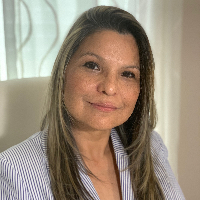
Maria Capehart
LMHC
Guided, practical support for everyday challenges
Opens BetterHelp in a new tab, where you can review online therapy options.
- Bilingual English Spanish
- Practical skills focus
- Collaborative goal setting
About Maria
Her work draws on client-centered principles, cognitive behavioral therapy, motivational interviewing, and trauma-focused methods. She treats each person as the expert on their life and aims to guide clients toward clearer goals and stronger coping skills. Sessions emphasize practical steps and real-world changes rather than long theory talks.
Maria helps people identify unhelpful thinking patterns and replace them with workable alternatives. She also supports clients in finding internal strengths and outside supports to make daily life more manageable. For people facing co-occurring mental health concerns, she focuses on skills that apply across problems, such as emotion regulation and problem-solving.
Her background includes delivering counseling for mood disorders, addiction, immigration-related stressors, and identity concerns in diverse communities. She brings that range into the room while keeping sessions focused on what the client needs right now. Maria aims to help clients build confidence, restructure limiting beliefs, and develop concrete skills to handle stressors.
To begin, she asks questions about current challenges and goals, then works with each person to set short-term, achievable steps. The approach is collaborative and steady, with an emphasis on usable tools and gradual progress.
Areas of expertise
Primary focus
Also works with
Additional focus areas
Therapeutic approaches
Experience
5+ years
Credentials
Florida
Languages
English, Spanish
Approaches that translate well to online work
Client-centered therapy centers the client's perspective and priorities, letting the person set goals while the therapist offers support and reflection to build confidence. This approach helps with motivation, self-esteem, and making real-life decisions.Cognitive behavioral therapy (CBT) focuses on identifying and changing unhelpful thoughts and behaviors. It often uses short exercises, thought records, and skill practice that can be done between sessions to manage anxiety, anger, and low mood.
Finding the right approach is part of the process. The therapist will work together with each person to choose methods that match their needs, goals, and preferences, and will adjust the plan as progress is made.
Confirm current session options before booking, since formats are not specified here. Online therapy can make it easier to fit counseling into a busy life - for example by cutting commute time, allowing quicker check-ins, and making it simpler to schedule sessions around work or family commitments. Some approaches like CBT lend themselves to short exercises or worksheets that translate well to remote work, while client-centered sessions support goal-setting and ongoing collaboration across appointments.
At a glance
- Listed location
- Florida
- Experience
- 5+ years
- Credentials
- LMHC
- Languages
- English, Spanish
- License (Florida)
- LMHC · No. MH17620
- NPI
- 1265983142
As listed by the therapist. You can check a license with the state board and an NPI with the national registry.
Frequently asked questions
What kinds of concerns does she address?
She works with a wide range of concerns including stress, anxiety, addiction, depression, relationship issues, parenting concerns, anger, trauma, and identity-related matters.
How would you describe her therapy style?
Her style is collaborative and down-to-earth, using client-centered care alongside cognitive behavioral techniques and motivational interviewing to set practical goals and build coping skills.
What is her professional background and experience?
She has five years of experience in the mental health field, providing counseling for mood disorders, co-occurring disorders, immigration stress, and related issues.
What credentials and location apply to her practice?
She is a Licensed Mental Health Counselor - LMHC - licensed in Florida and practices there.
Which languages are available for sessions?
Sessions are offered in English and Spanish.
Does she work with international clients?
She is not currently accepting international clients.
How are sessions priced and billed?
Cost varies with location and therapist availability; sessions use a subscription model that can be canceled at any time.
How do I get started with scheduling?
Use the Start Therapy button, complete a short matching questionnaire, and then schedule sessions according to the therapist's availability.
Before you start
- Online talk therapy is not a court-ordered or mandated anger-management course, and it does not provide attendance certificates.
- Check that the location and license details above fit where you live.
- If anyone is at risk of being harmed, contact emergency services or a domestic-abuse helpline first. See the support lines for the US, UK and Australia.